

Forget the trends. Here’s what matters every time we design a bathroom.
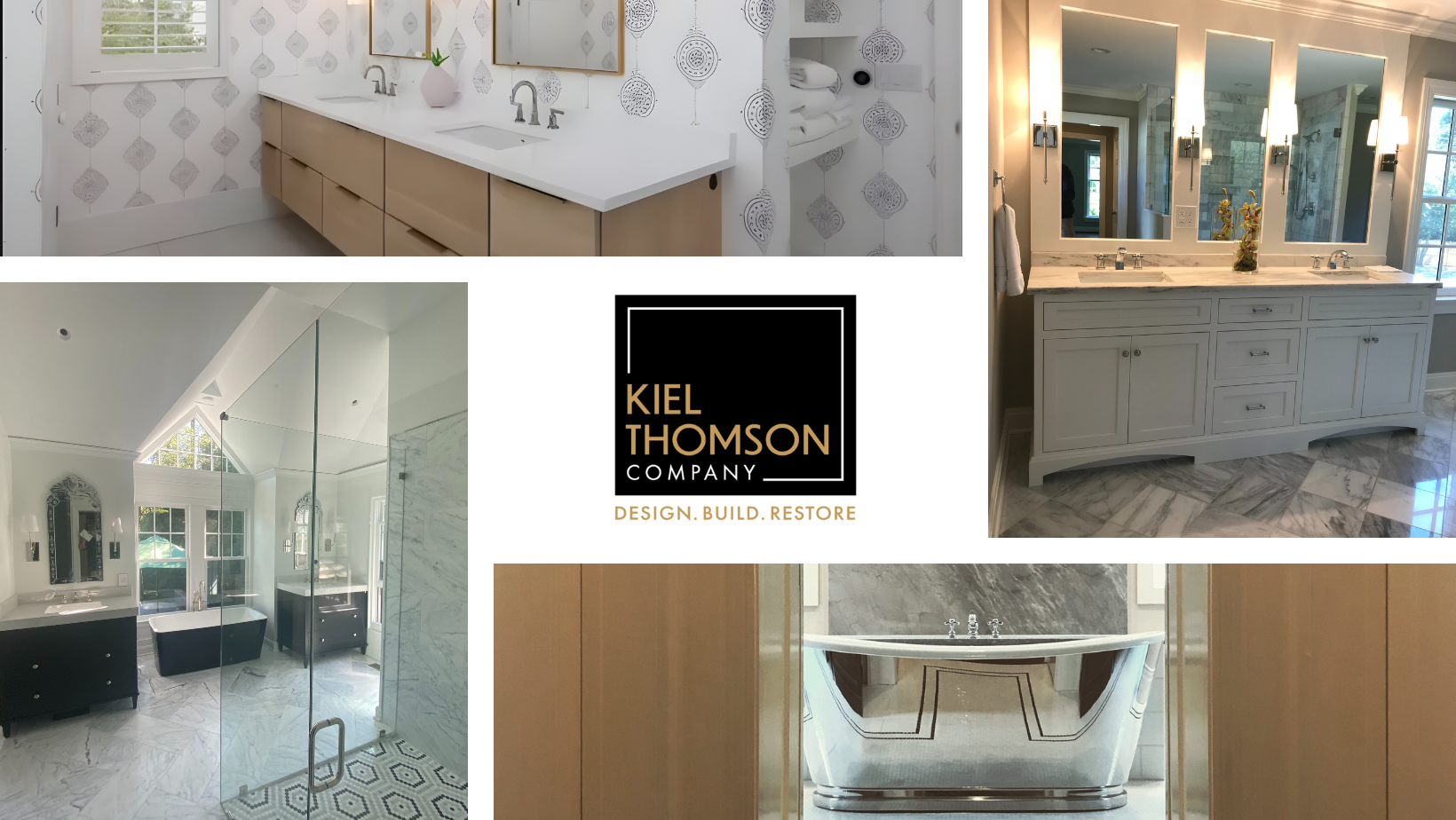
It’s 6:03 a.m. on a Tuesday.
The house is quiet, but the bathroom is already telling the truth. The light is either too harsh or not bright enough. The counter feels cluttered. The shower takes too long to warm up. In those first minutes of the day, you don’t care how the room photographs—you care how it works.
That’s why the most successful bathroom remodels don’t start with trends or inspiration boards. They start with real problems: poor lighting, awkward layouts, no storage, cold or echoing showers, finishes that already feel dated.
At Kiel Thomson Company, the bathrooms clients love years later—whether a primary suite or a powder room—are designed around three questions:
What story is this space telling?
How does it feel at 6 a.m. on a Tuesday?
Will it still look right in 20 years?
This guide focuses on how to answer those questions with confidence—by prioritizing function, durability, and design decisions that hold up to daily life.
Start With the Story (Not the Tile)
A bathroom is one of the most repeated experiences in your home. When you define the story first, decisions get easier.
Before selecting finishes, describe the room in one sentence:
A calm, spa-like retreat.
A tailored bathroom that feels original to a historic home.
A high-function family space that can take daily wear.
A small powder room with intentional personality.
That sentence becomes a filter. If a choice doesn’t support it, it’s easier to let go.
“Timeless” isn’t a style—it’s a strategy. Spaces that age well tend to share a few traits: natural materials or durable analogs, simple geometry, and restraint. One strong focal point almost always outperforms five competing statements.
Luxury also shows up in places you don’t see first: acoustic comfort, thermal comfort, and tactile details. Solid doors, well-chosen ventilation, properly sized heating, and thoughtful touch points make a bathroom feel elevated long before finishes are noticed.
Design for Tuesday Morning
Most bathroom frustrations come from planning—not décor.
Layout should support real movement. Ask whether two people can use the space at once without crowding, whether drawers and doors clear each other, and whether there’s a place to set items where you actually need them. Small shifts—like changing a door swing or adding a pocket door—can dramatically improve flow.
Lighting should be layered. A reliable plan includes ambient light for overall coverage, task lighting at the mirror, and accent lighting for warmth and character. Putting these layers on separate switches or dimmers makes early mornings calmer and evenings more relaxed.
Storage should reflect what you actually own. Deep drawers, recessed medicine cabinets, vertical pullouts, and a place for awkward items like hair tools keep counters clear. A tidy bathroom isn’t about discipline—it’s about design.
Build for 20 Years
Longevity depends on the fundamentals you don’t see.
Moisture management is critical. Bathrooms last when ventilation is intentional, waterproofing is treated as a system, and materials are chosen for real use—not just appearance.
Materials that age well develop character instead of damage. Porcelain tile is durable and forgiving. Natural stone can be beautiful when used thoughtfully. Countertops, paint, and grout choices should support normal life without constant worry.
Fixtures are worth investing in where you touch, use, and service them daily—valves, faucets, hardware, and drawer slides. Water-efficient fixtures certified through EPA WaterSense reduce consumption without sacrificing performance, delivering daily comfort and long-term savings.
Smart accessibility features—like low-threshold showers, comfort-height toilets, and future-ready wall blocking—improve comfort now and usability later without feeling clinical.
Process Matters
Bathrooms compress plumbing, electrical, ventilation, waterproofing, and finish work into a small footprint. Costs rise fastest when plumbing moves, tile becomes complex, or fixtures multiply—so aligning priorities early is key.
Return on investment isn’t just resale math. It’s daily ease, durability over time, and a space that still reads as well-built years from now.
When decisions get noisy, return to the framework:
Does this support the story?
Does it make Tuesday mornings easier?
Will it hold up in 20 years?
If the answer is yes to all three, the design usually takes care of itself.
A bathroom that works at 6:03 a.m. on a Tuesday—and still feels right decades later—isn’t about trends. It’s about clarity, planning, and building the unglamorous details correctly.
If you’re considering a bathroom remodel in Louisville and want a space that feels inevitable—like it was always meant to be there—Kiel Thomson Company can help you pressure-test the plan before a single tile is ordered.
